Loop engineering lasted about six weeks before the AI industry started asking what came after it.
On July 18, 2026, Peter Steinberger, whose earlier post helped ignite the loop-engineering conversation, asked a one-line question: "Are we still talking loops or did we shift to graphs yet?" The timing was almost too perfect. Our guide to loop engineering, published the same day, ended by predicting that graphs would be the next term to absorb ideas that agent frameworks had already been implementing for years.
That prediction aged quickly. "Graph engineering" is now appearing in technical guides, open-source projects, and architecture discussions. But the phrase is moving faster than its definition. Depending on who is using it, a graph can mean an agent workflow, a multi-agent organization, a knowledge graph, a task-dependency graph, or simply a diagram with boxes and arrows.
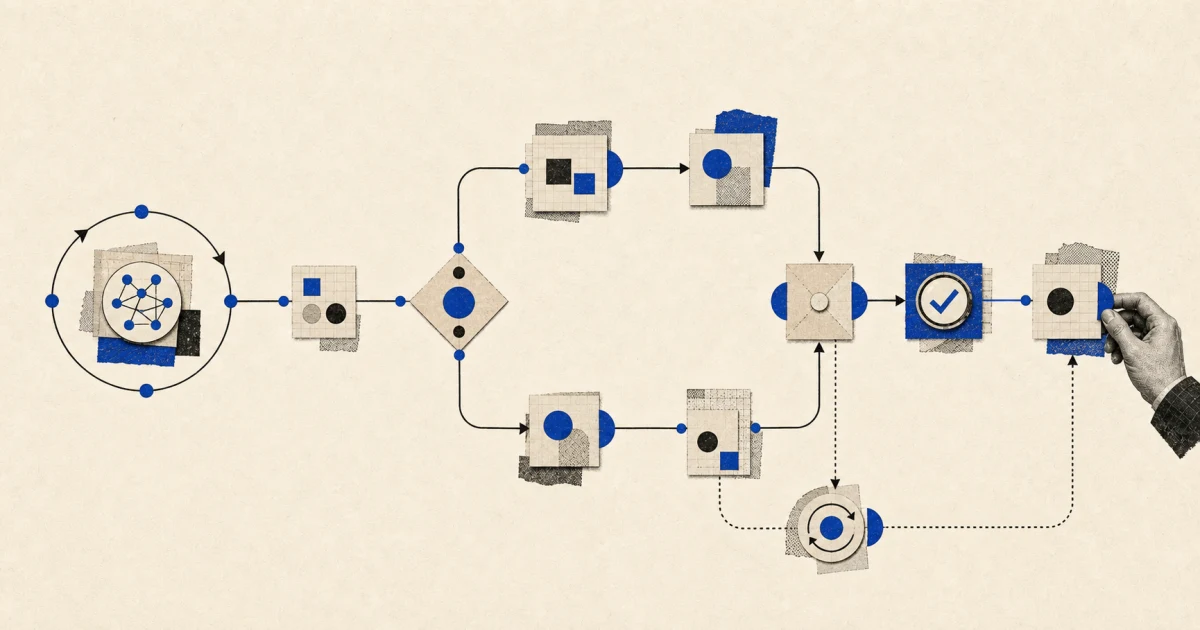
Short answer: graph engineering is the practice of explicitly designing how agents, tools, deterministic code, validators, data, and humans connect to complete a task. Nodes do work. Edges decide what can happen next. Shared state carries evidence between steps. Branches, parallel paths, retries, approvals, and stop conditions make the system more than one agent running in a loop. The architecture is real. The name is new, loose, and already overused.
The important shift is not from loops to graphs. A useful agent graph contains loops. The shift is from engineering one autonomous worker to engineering the coordination system around many kinds of work.