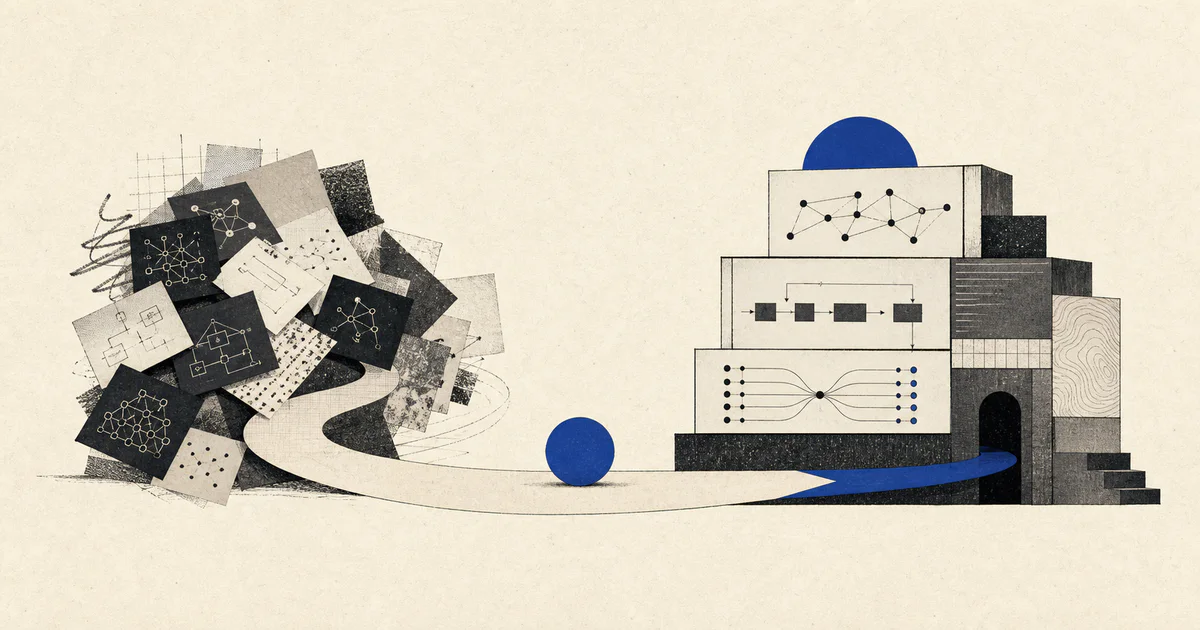
The Three Layers You Actually Need
When I look at production AI agent systems that are working well, they have three clear layers, and founders who understand this avoid 80% of architectural mistakes.
Layer 1: The Reasoning Layer
This is the model, the thing that thinks. GPT-4o, Claude Sonnet, Gemini Pro. Right now, if you're building an agent that needs strong instruction-following, tool use, and coherent multi-step reasoning, you're choosing between Anthropic and OpenAI for most commercial applications.
The founder mistake here: picking the reasoning model last, after choosing the framework. Do the opposite. Run your core reasoning task directly against several models with no framework overhead. Judge the output quality. Then build around the winner.
The model is your product's brain. Everything else is plumbing.
Agents are only as useful as the tools they can use. Tools are functions your agent can call, searching the web, querying a database, sending an email, calling an external API, writing a file.
This layer is where most of your product-specific engineering lives. Well-designed tools have three properties:
- Clear names and descriptions, the model decides when to use a tool based on what you tell it the tool does. Vague descriptions = bad tool selection.
- Deterministic outputs, if a tool can fail in ambiguous ways, your agent will be confused about how to proceed. Handle errors explicitly and return structured failure states.
- Narrow scope, one tool does one thing. The more you pack into a single tool, the harder it is for the model to use correctly.
A good heuristic: if you can't explain what a tool does in one sentence, break it into two tools.
Layer 3: The Orchestration Layer
This is what most founders obsess about, the framework, the graph, the flow. It's actually the least important layer to get right early, because you can change it later.
Orchestration manages: which agent runs when, what context gets passed between steps, how failures are handled, when to bring a human into the loop, and how the overall workflow terminates.
For most early-stage products, you need much less orchestration than you think. A simple loop, call model, execute tools, check if done, repeat, handles the majority of agent use cases. Don't add complexity before you know what you actually need.