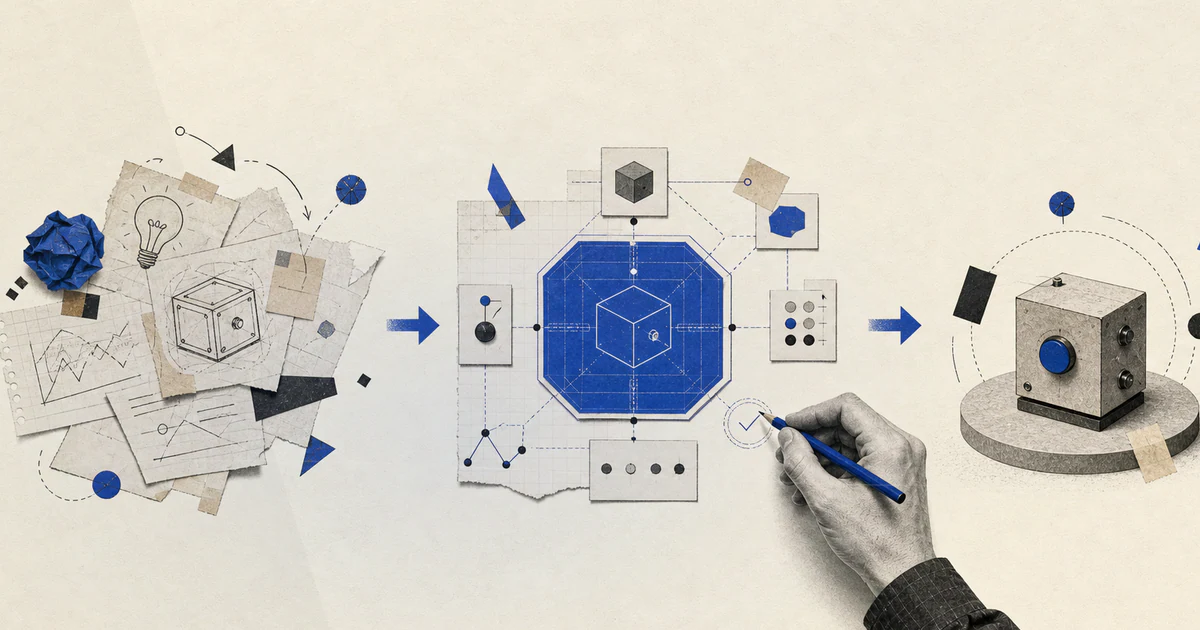
Scoping for Demo vs. Scoping for Users
These are different products. Most founders don't understand this distinction and end up with a product that works for neither.
Demo scope: Everything that shows investors the vision and proof of concept. May include flows that are only partially automated, data that is partially real and partially illustrative, and UI that's more polished than the underlying infrastructure warrants.
User scope: Everything that solves a real problem for real users reliably. May be less visually impressive than the demo scope but more robust, more accurate on edge cases, and more useful in everyday workflows.
The 30-day investor MVP lives in a specific zone: it needs to be credible enough to raise money, but also genuinely useful enough that the early users you bring to the demo are real users, not plants.
How to scope it: start from your demo narrative, not your product vision.
What is the 5-minute story you'll tell with this product in front of an investor? Map backward from that story to the exact features that need to be working for the story to land. Build those features. Everything else is roadmap.
I worked with a founder building an AI tool for procurement teams. Her initial scope had 6 core features. When we mapped backward from her demo narrative, which was a 5-minute walkthrough of a procurement manager saving 3 hours on a vendor comparison, we identified that only 2 of those 6 features needed to be in the demo. The other 4 were important eventually, but they weren't in the story.
We shipped the 2 core features brilliantly in 15 days. The demo was clean, powerful, and precisely targeted at the problem. She raised a pre-seed round within 60 days of shipping.